Introduction
What is the best yarn for beginner crocheters?
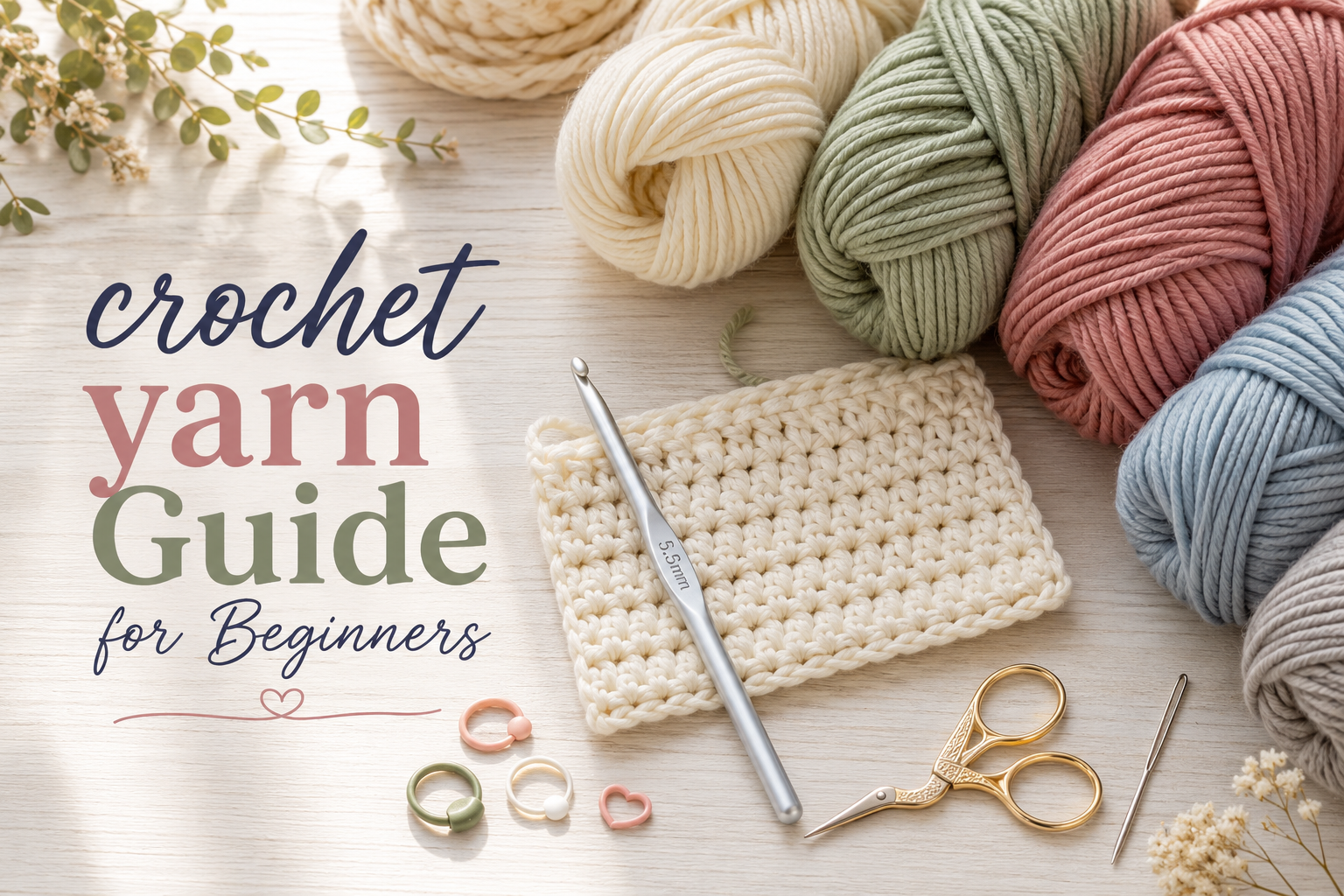
The best yarn for beginners is a smooth worsted-weight (size 4) acrylic yarn in a light or medium solid color. It is affordable, easy to see, forgiving when mistakes happen, and works with most beginner crochet patterns. If you’ve ever walked into a craft store and stared at hundreds of yarn options without knowing what to buy, you’re not alone. Many beginners assume learning crochet is the hard part. In reality, choosing the wrong yarn often creates frustration before you even finish your first project. Fuzzy yarn hides stitches. Dark colors make counting difficult. Slippery fibers slide off your hook. These issues can make crochet feel far more difficult than it actually is. The good news is that choosing beginner-friendly yarn is surprisingly simple once you know what to look for.
In this guide, you’ll learn:
- The best yarn weight for beginners
- Which fiber types are easiest to use
- Acrylic vs cotton comparisons
- Recommended beginner yarn brands
- The best yarn colors for learning
- Yarns beginners should avoid
- Hook and yarn pairing charts
- How much yarn do you need for common projects
- Common mistakes and how to avoid them
Let’s start with the most important question.
What Makes a Yarn Beginner-Friendly?
Not all yarns are created equal. Some make learning crochet enjoyable, while others make it frustrating.
The best beginner crochet yarn has five important characteristics.
1. Smooth Texture
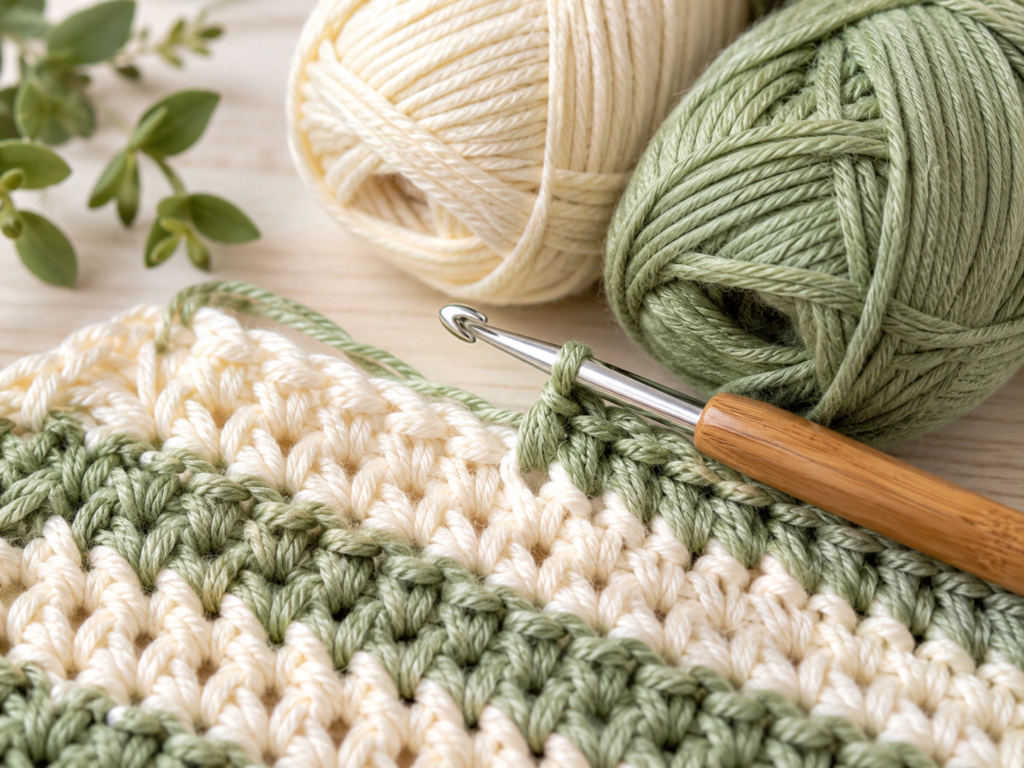
Smooth yarn allows your hook to move through stitches easily.
When learning crochet, you’ll frequently need to count stitches, identify mistakes, and undo rows. Smooth yarn makes all of these tasks easier.
Avoid:
- Eyelash yarn
- Bouclé yarn
- Mohair
- Fur yarn
- Highly textured novelty yarns
2. Medium Weight
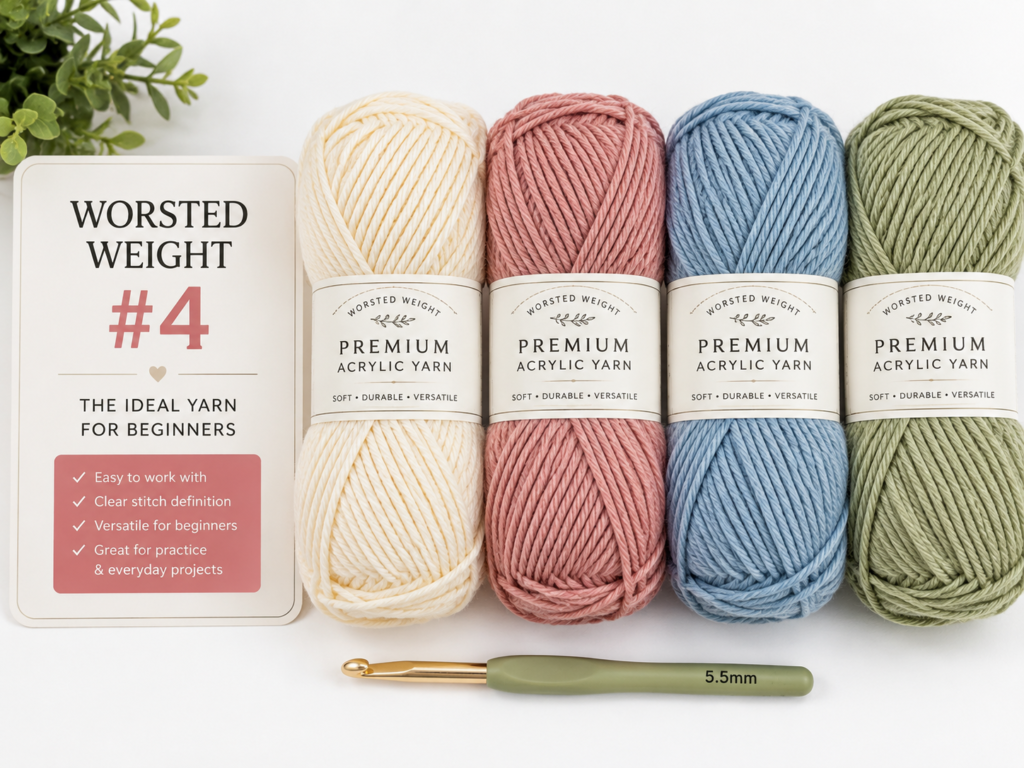
The easiest yarn weight for beginners is worsted weight (size 4).
It’s thick enough to clearly see stitches without being bulky or difficult to handle.
3. Light or Medium Color
Color matters more than most beginners realize
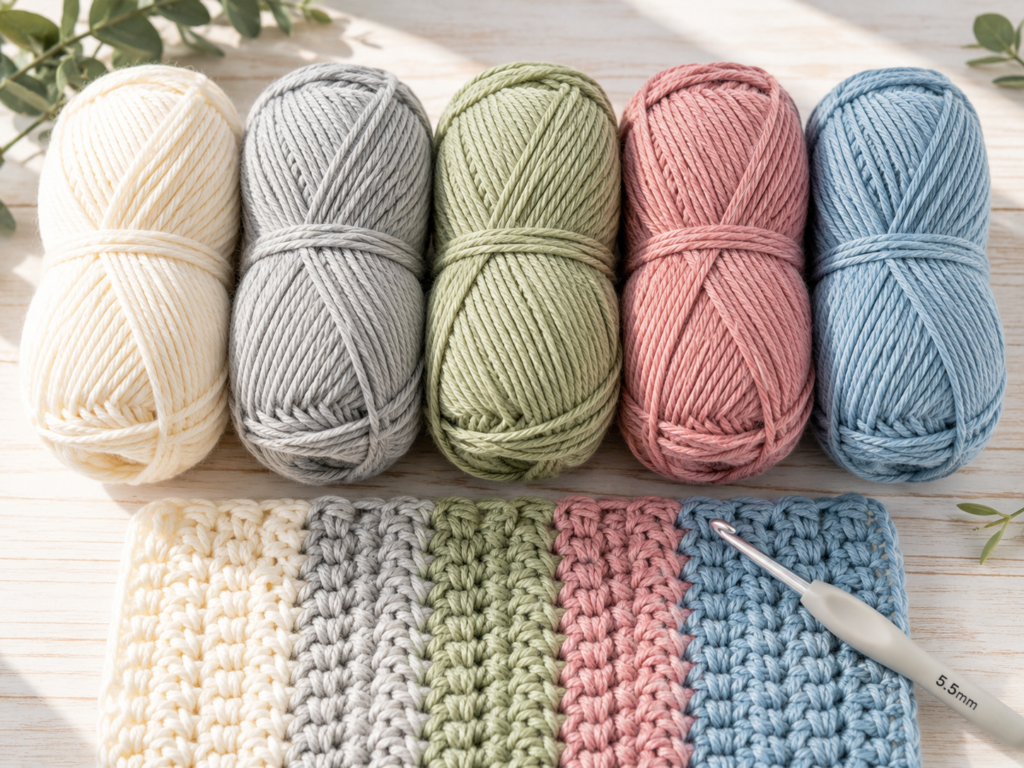
Choose:
- Cream
- Sage green
- Dusty rose
- Light gray
- Soft blue
- Beige
Avoid:
- Black
- Navy
- Dark brown
- Burgundy
4. Forgiving Fiber
Acrylic and cotton-acrylic blends provide enough grip to keep stitches stable while remaining easy to undo.
5. Affordable Price
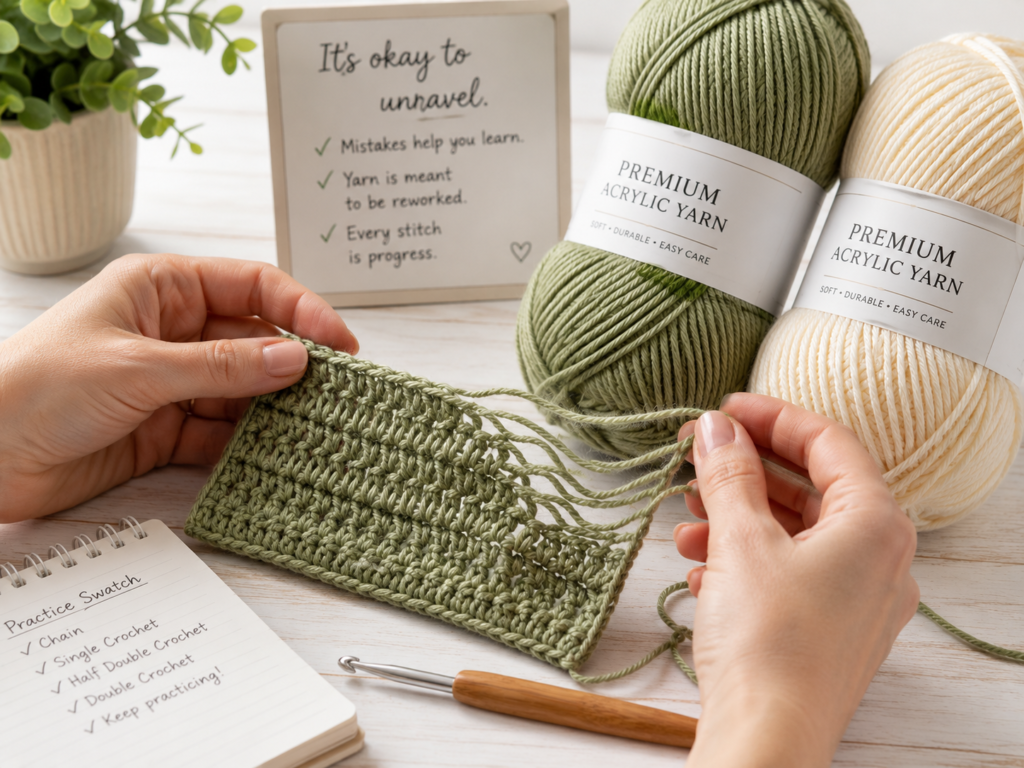
Beginners make mistakes.
You’ll probably unravel projects multiple times while learning. Affordable yarn removes the pressure of wasting expensive materials.
Best Yarn Weight for Beginners
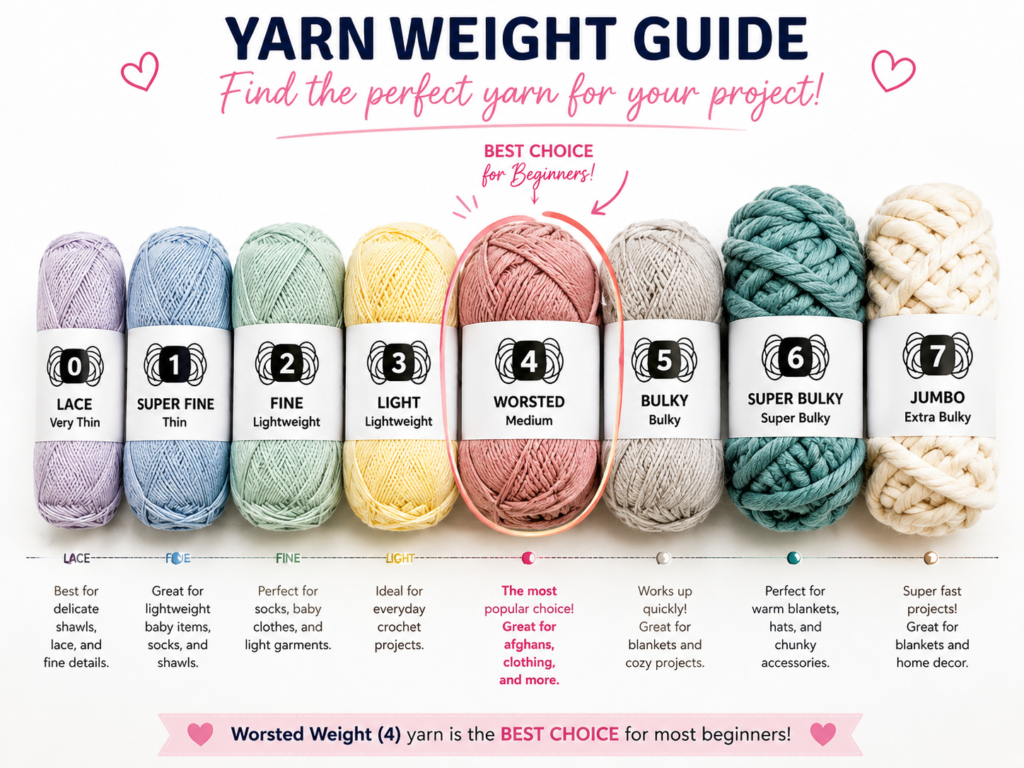
Yarn weight refers to yarn thickness.
The easiest yarn weight for beginners is worsted weight (size 4).
Yarn Weight Chart
| Weight | Category | Beginner-Friendly |
| 0 | Lace | No |
| 1 | Fingering | No |
| 2 | Sport | Difficult |
| 3 | DK | Good |
| 4 | Worsted | Best Choice |
| 5 | Bulky | Good |
| 6 | Super Bulky | Moderate |
| 7 | Jumbo | Not Recommended |
Why Worsted Weight Is Best
Worsted weight offers:
- Easy stitch visibility
- Comfortable handling
- Widely available patterns
- Affordable pricing
- Compatibility with standard hooks
Most beginner crochet tutorials and patterns use worsted-weight yarn because it creates the best learning experience.
How to Read a Yarn Label
Learning to read a yarn label can save money and prevent mistakes in projects.
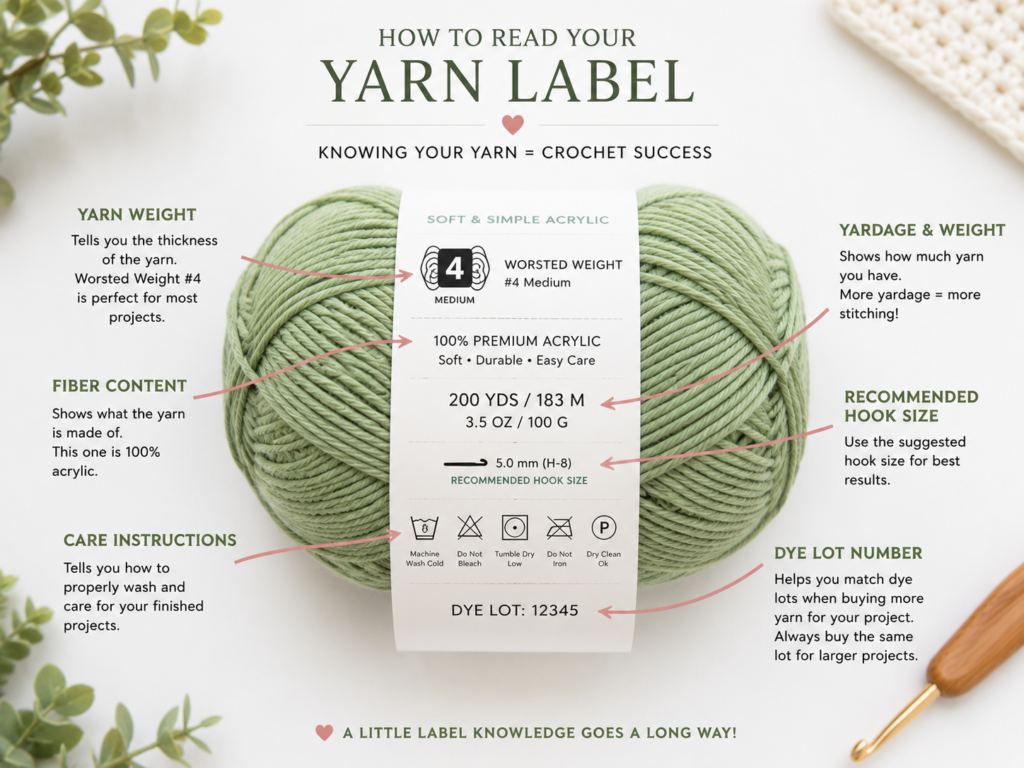
Weight Symbol
Look for the number inside the yarn icon.
For beginners:
Choose size 4 whenever possible.
Fiber Content
Examples:
- 100% Acrylic
- 100% Cotton
- 60% Cotton / 40% Acrylic
Fiber content affects:
- Softness
- Durability
- Stretch
- Washability
Yardage
Always pay attention to yardage rather than skein size.
Two skeins may weigh the same but contain very different amounts of yarn.
Hook Recommendation
Most labels include suggested crochet hook sizes.
This gives you an excellent starting point.
Care Instructions
Look for:
- Machine washable
- Dryer-safe
- Easy-care fibers
These features make projects more practical.
Dye Lot Number
Always buy matching dye lots for larger projects.
Different dye lots can result in noticeable color variations.
Acrylic vs Cotton: Which Is Better for Beginners?
This is one of the most common beginner questions.
The answer depends on your goals.
Acrylic Yarn
Advantages
- Affordable
- Widely available
- Easy to frog
- Machine washable
- Soft options available
- Large color selection
Disadvantages
- Less breathable
- Synthetic fiber
Best For
- Blankets
- Scarves
- Hats
- Practice projects
- Granny squares
Cotton Yarn
Advantages
- Excellent stitch definition
- Natural fiber
- Durable
- Great for household items
Disadvantages
- Less stretch
- Can feel stiff initially
- Harder to frog
Best For
- Dishcloths
- Market bags
- Summer accessories
- Face scrubbies
Cotton vs Acrylic Yarn Comparison
| Feature | Acrylic | Cotton |
| Beginner-Friendly | Excellent | Good |
| Cost | Lower | Higher |
| Stretch | Moderate | Low |
| Stitch Visibility | Good | Excellent |
| Softness | Good | Moderate |
| Washability | Excellent | Excellent |
| Durability | Good | Excellent |
Verdict
If this is your very first crochet project, choose acrylic.
If you’re making dishcloths or bags, cotton is a fantastic option.
If you want the best of both worlds, choose a cotton-acrylic blend.
Best Yarn Colors for Beginners
Many crochet guides overlook color, but it has a huge impact on learning.
Best Colors
- Cream
- Light gray
- Dusty rose
- Sage green
- Sky blue
- Light beige
- Soft lavender
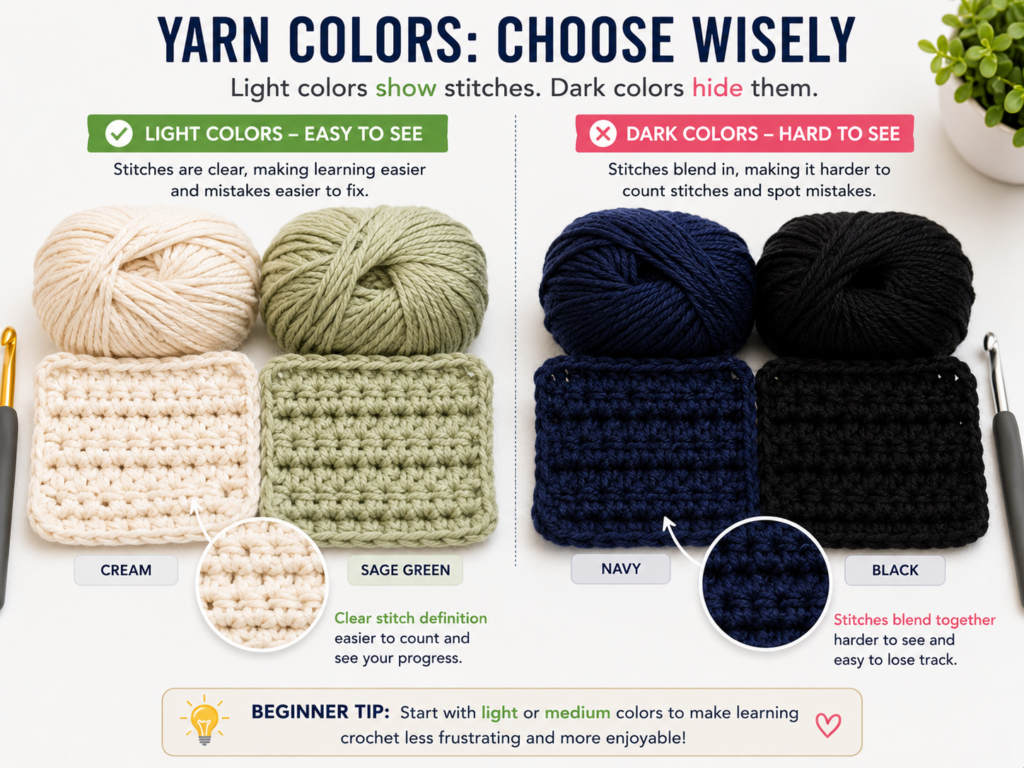
These colors make stitches easy to see and count.
Colors to Avoid
Black
Black yarn hides stitch definition.
Navy
Dark navy creates the same visibility issues as black.
Dark Brown
Difficult to work under indoor lighting.
Deep Burgundy
Can make stitch counting frustrating.
What About Variegated Yarn?
Variegated yarn is beautiful, but color changes can make stitch structure harder to identify.
For your first projects, stick with solid colors.
Best Yarn Brands for Beginner Crocheters
These yarns consistently perform well for new crocheters.
Best Overall: Lion Brand Pound of Love
- Weight: Worsted (4)
- Fiber: Acrylic
- Soft texture
- Excellent value
- Great for blankets
Best Budget Option: Red Heart Super Saver
- Weight: Worsted (4)
- Fiber: Acrylic
- Affordable
- Widely available
- Durable
Softest Beginner Acrylic: Caron Simply Soft
- Weight: Worsted (4)
- Fiber: Acrylic
- Smooth texture
- Great drape
- Ideal for scarves
Best Cotton Yarn: Lion Brand 24/7 Cotton
- Weight: Worsted (4)
- Fiber: Cotton
- Crisp stitch definition
- Durable
- Excellent for kitchen projects
Best Bulky Yarn: Lion Brand Hue + Me
- Weight: Bulky (5)
- Large stitches
- Quick projects
- Confidence-building for beginners
Best Yarn by Skill Level
Absolute Beginners
Choose:
- Worsted-weight acrylic
- Light colors
- Smooth texture
Examples:
- Red Heart Super Saver
- Pound of Love
Beginners After Their First Project
Try:
- Cotton blends
- DK weight yarn
- Slightly softer yarns
Confident Beginners
Explore:
- Premium acrylic
- Cotton
- Wool blends
- Bulky yarns
Best Yarn by Project Type
| Project | Recommended Yarn |
| Practice Swatch | Acrylic Worsted |
| Dishcloth | Cotton |
| Scarf | Soft Acrylic |
| Beanie | Acrylic Blend |
| Granny Squares | Smooth Acrylic |
| Baby Blanket | Soft Acrylic |
| Market Bag | Cotton |
| Amigurumi | Cotton or Acrylic |
| Throw Blanket | Bulky Acrylic |
Beginner Yarn Shopping Checklist
Before buying yarn, make sure it checks these boxes:
✓ Smooth texture
✓ Size 4 (worsted weight)
✓ Light or medium color
✓ Acrylic or cotton blend
✓ Machine washable
✓ Affordable price
✓ Easy-to-read label
✓ Available in matching dye lots
This simple checklist prevents most beginner mistakes.
Yarns Beginners Should Avoid
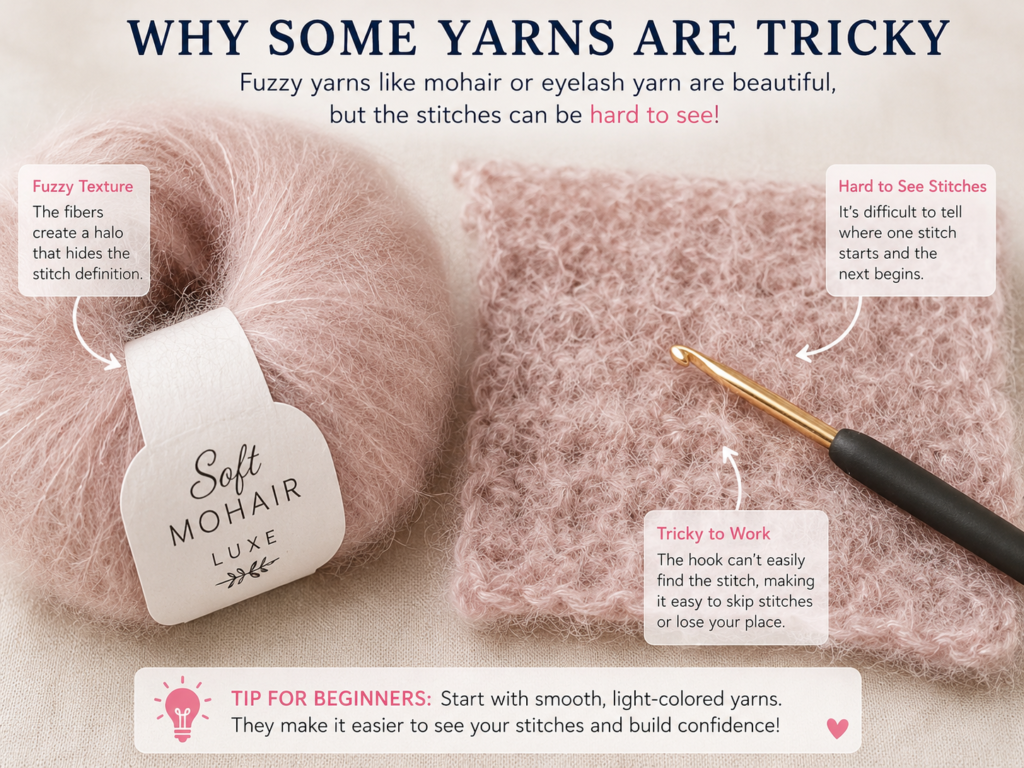
Fuzzy Yarn
Examples:
- Mohair
- Eyelash yarn
- Bouclé
These hide stitches and make mistakes difficult to fix.
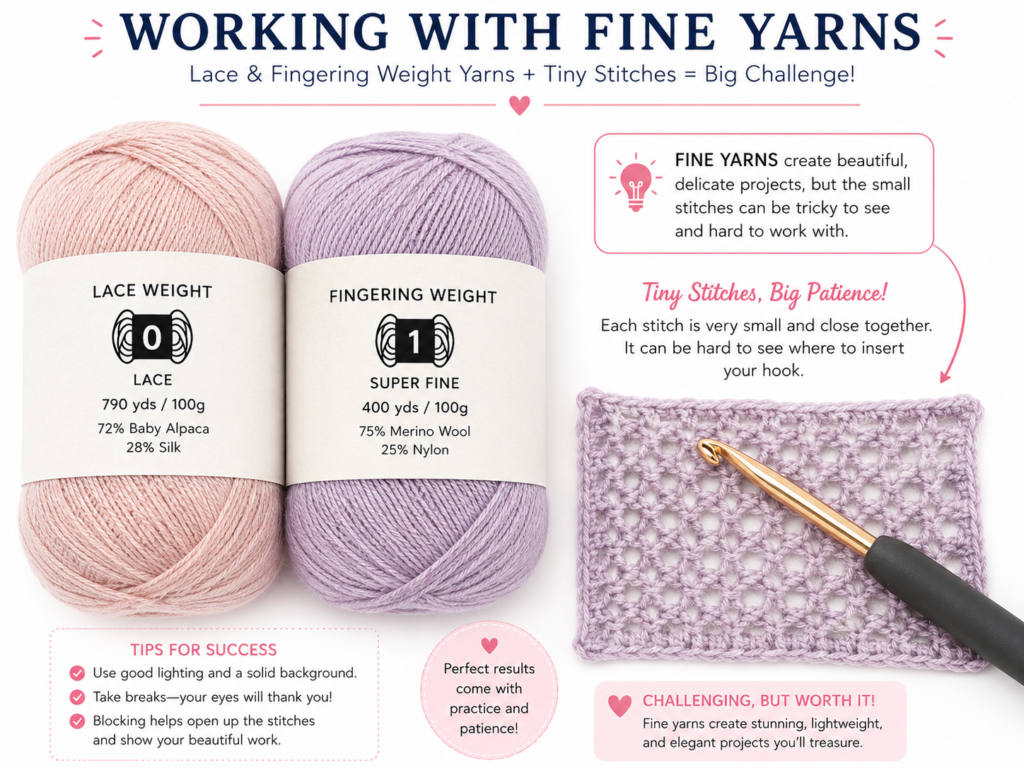
Thin Yarn
Examples:
- Lace
- Fingering
- Sock yarn
These require advanced tension control.
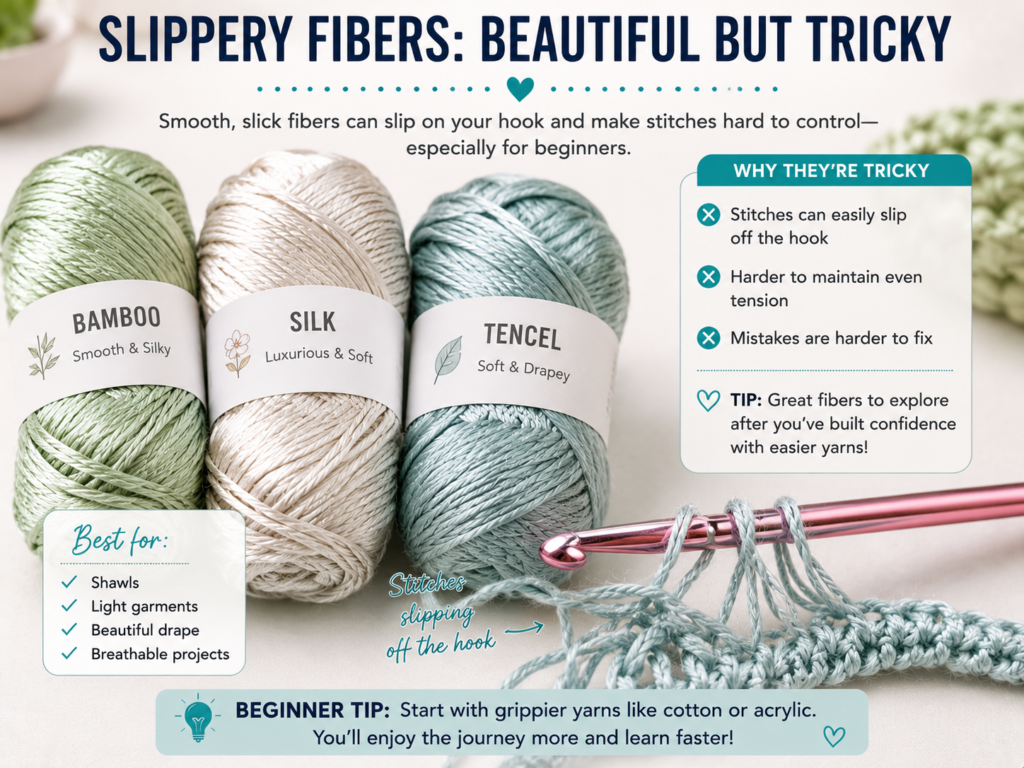
Slippery Fibers
Examples:
- Silk
- Bamboo
- Tencel
Beautiful fibers, but challenging for beginners.
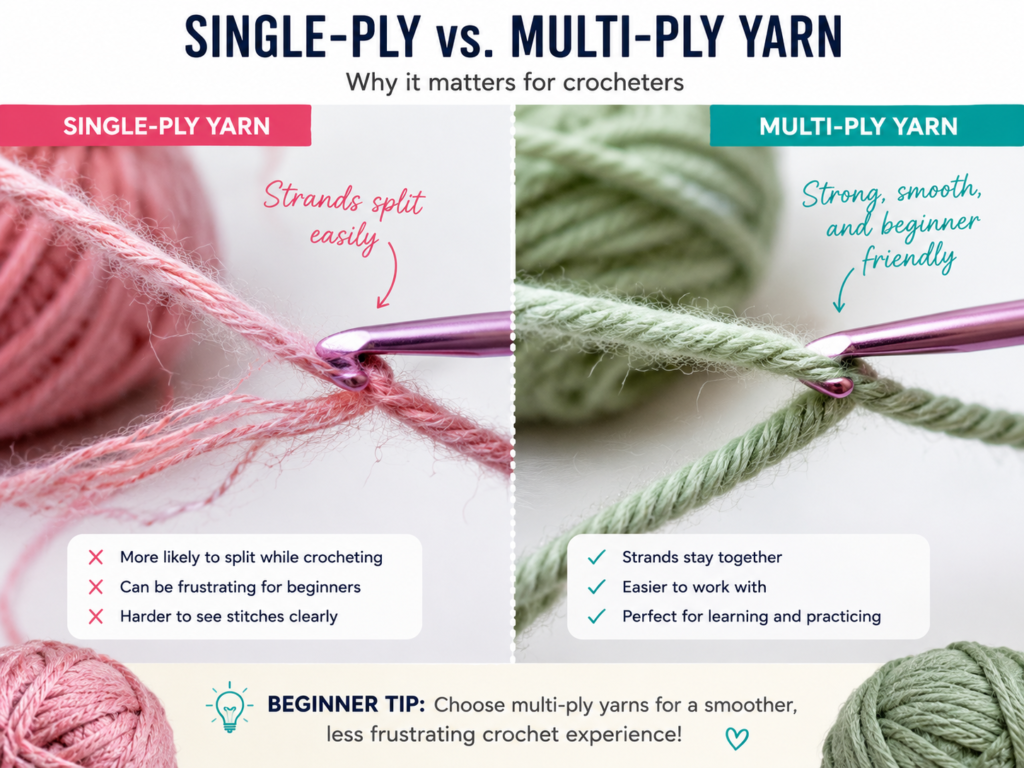
Single-Ply Yarn
Can split easily, frustrating new crocheters.
Very Dark Colors
Hard to see and count.
What Crochet Hook Goes With Beginner Yarn?
For worsted-weight yarn:
Use a 5.0mm–5.5mm crochet hook.
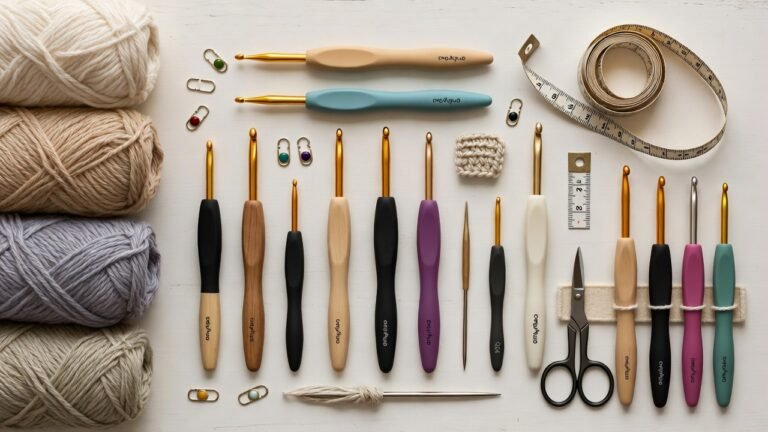
Hook Size Chart
| Yarn Weight | Hook Size |
| Lace | 1.5–2.25mm |
| Fingering | 2.25–3.5mm |
| Sport | 3.5–4.5mm |
| DK | 4.5–5.5mm |
| Worsted | 5.0–6.0mm |
| Bulky | 6.0–9.0mm |
| Super Bulky | 9.0–15mm |
Best Hook Material for Beginners
Aluminum
Recommended for most beginners.
Advantages:
- Smooth glide
- Affordable
- Durable
Wood
Offers more grip but can sometimes snag.
Plastic
Lightweight and useful for bulky yarn projects.
How Much Yarn Do You Need?
Practice Swatch
50–100 yards
Dishcloth
80–120 yards
Scarf
200–400 yards
Beanie
150–250 yards
Baby Blanket
800–1,200 yards
Throw Blanket
1,500–2,500 yards
Pro Tip
Buy 10–15% extra yarn whenever possible.
Running out mid-project is one of the most common crochet frustrations.
What Should You Make First?
Choosing the right first project matters.
Best First Projects
Dishcloth
Small, useful, and quick to finish.
Granny Square
Teaches important crochet skills.
Simple Scarf
Excellent stitch practice.
Face Scrubbies
Fast and beginner-friendly.
Baby Blanket
Great confidence-building project.
How Much Does It Cost to Start Crocheting?
A common misconception is that crochet is expensive.
Here’s a realistic beginner budget.
| Item | Cost |
| Yarn | $10–20 |
| Hook | $3–10 |
| Stitch Markers | $2–5 |
| Yarn Needle | $2–5 |
| Scissors | $3–10 |
Total Beginner Setup
Approximately $20–40.
That’s enough to complete several projects.
Common Crochet Yarn Mistakes
Buying Yarn Based on Appearance Alone
Beautiful yarn isn’t always beginner-friendly.
Always prioritize usability over appearance.
Choosing Black Yarn
One of the most common beginner mistakes.
Ignoring Yarn Labels
Labels contain essential information.
Not Buying Enough Yarn
Always purchase an extra skein.
Using Expensive Yarn Too Early
Practice with affordable yarn first.
Starting With Thin Yarn
Worsted weight remains the easiest choice.
When Should You Upgrade Your Yarn?
Month One
Practice with affordable acrylic.
Month Two
Experiment with cotton blends.
Month Three
Try premium acrylics and natural fibers.
Gradual progression helps develop confidence and technique.
My Recommendation for New Crocheters
If you’re standing in a craft store today and want the simplest answer possible:
Buy a light-colored worsted-weight acrylic yarn and pair it with a 5.5mm aluminum crochet hook.
This combination provides:
- Easy stitch visibility
- Affordable learning
- Simple corrections
- Pattern compatibility
- Low frustration
That’s exactly what beginners need.
Frequently Asked Questions
What is the best yarn for beginner crocheters?
Smooth worsted-weight acrylic yarn in a light or medium solid color.
Should beginners use cotton or acrylic yarn?
Acrylic is generally easier for first projects because it is forgiving and affordable.
What yarn weight is easiest for beginners?
Worsted weight (size 4).
Can beginners use bulky yarn?
Yes. Bulky yarn can be a good option for quick projects, but worsted weight teaches stitch recognition better.
What color yarn is easiest to crochet with?
Cream, sage green, dusty rose, light gray, and soft blue.
Is cheap yarn okay for learning?
Absolutely. Budget acrylic yarn is often the smartest place to start.
Can beginners use wool?
They can, but acrylic is generally easier and less expensive.
What yarn should beginners avoid?
Fuzzy yarn, dark colors, lace-weight yarn, slippery fibers, and novelty yarns.
Can I use knitting yarn for crochet?
Yes. Most yarns work for both knitting and crochet.
Final Thoughts
The best yarn for beginner crocheters isn’t necessarily the softest, most expensive, or trendiest yarn on the shelf. The best beginner yarn is the one that makes learning easier. For most new crocheters, that means a smooth worsted-weight acrylic yarn in a light solid color paired with a 5.0mm–5.5mm hook.
Start simple. Focus on learning stitches. Complete a few small projects. Then gradually explore new fibers, textures, and yarn weights as your confidence grows. The right yarn won’t make you an expert overnight, but it can make your crochet journey far more enjoyable from the very first stitch.