Best Crochet Hooks for Beginners and Experienced Crocheters
A crochet hook can make or break a project. Some hooks glide smoothly and feel comfortable for hours. Others leave your hands sore halfway through a blanket row. If your stitches feel uneven or crocheting suddenly feels frustrating, your hook may be the problem.
I’ve tested everything from cheap aluminum sets to premium ergonomic crochet hooks over the years, especially for blankets, granny squares, and beginner projects. Some lived up to the hype. Some absolutely didn’t.
This guide covers:
- the best crochet hooks for beginners,
- Ergonomic crochet hooks are worth buying.
- hook sizes and materials,
- inline vs tapered hooks,
- and the crochet hooks I’d actually recommend after real use.
Whether you crochet daily or you’re just learning chain stitch number one, this will help you choose the right hook faster.
Quick Comparison: Best Crochet Hooks
| Crochet Hook | Best For | Hook Type | Comfort Level | Price |
| Clover Amore | Beginners & everyday crochet | Tapered | Excellent | $$$ |
| Tulip Etimo | Smooth stitching | Tapered | Excellent | $$$$ |
| Furl’s Odyssey | Hand pain & long sessions | Inline hybrid | Excellent | $$$$ |
| Susan Bates | Amigurumi & tight tension | Inline | Good | $$ |
| Boye Ergonomic | Budget-friendly crochet | Tapered | Good | $$ |
What Makes a Good Crochet Hook?
The best crochet hooks usually have three things:
- smooth yarn glide,
- comfortable grip,
- consistent stitch control.
That sounds simple, but small differences in shape and material change the entire feel of crocheting.
A good hook helps:
- reduce hand strain,
- improve tension,
- prevent yarn splitting,
- and make stitching faster.
Especially during larger projects like temperature blankets or granny square cardigans.
Parts of a Crochet Hook
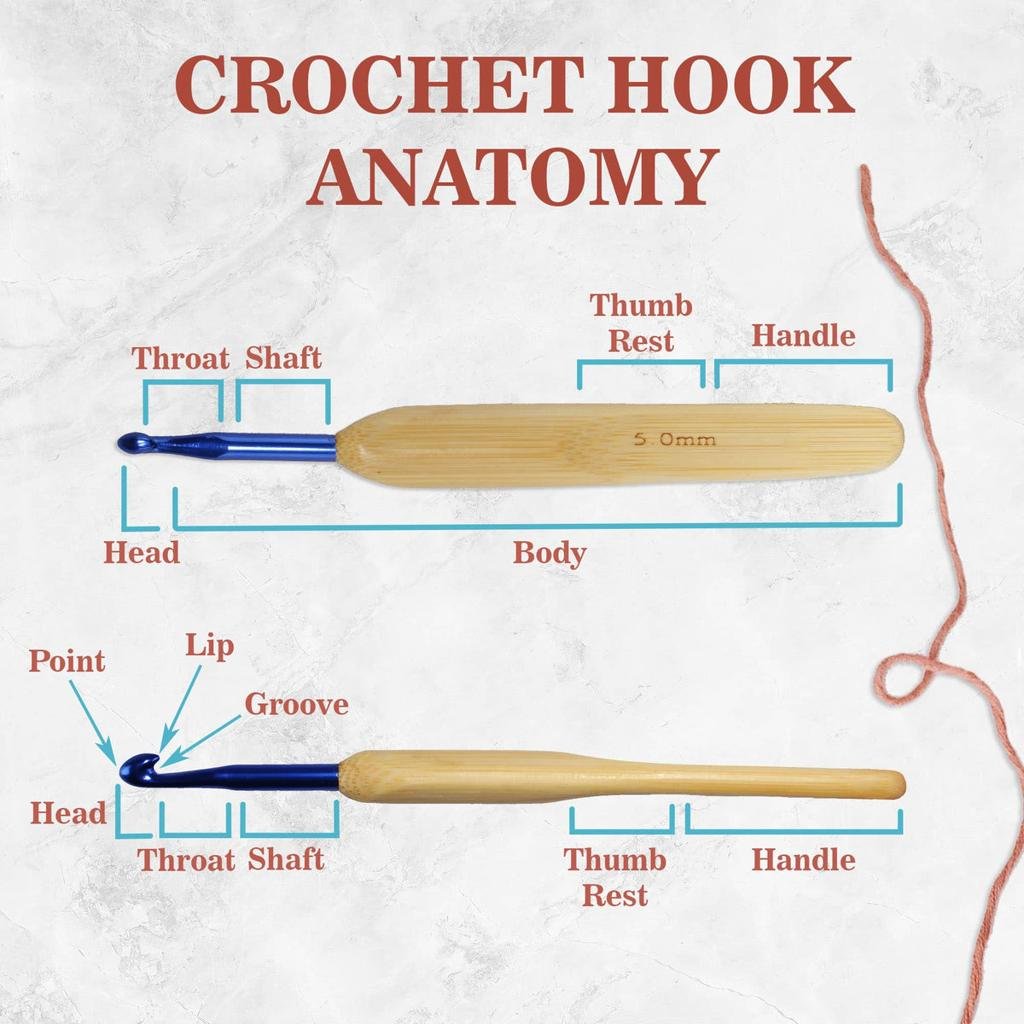
Understanding crochet hook anatomy helps a lot when comparing brands.
Head
The top section that grabs the yarn.
Sharper heads slide into tighter stitches more easily. Rounded heads feel smoother with soft yarn.
Throat
The groove below the hook head.
A deeper throat usually holds yarn more securely while stitching.
Shaft
This controls stitch size and tension consistency.
A smooth shaft makes crocheting feel cleaner and more even.
Grip or Thumb Rest
Where your hand naturally rests.
Ergonomic crochet hooks add padding here to reduce wrist and finger strain.
Inline vs Tapered Crochet Hooks
This is one of the biggest differences between crochet hook brands.
And honestly, it changes the entire stitching experience.
Inline Crochet Hooks
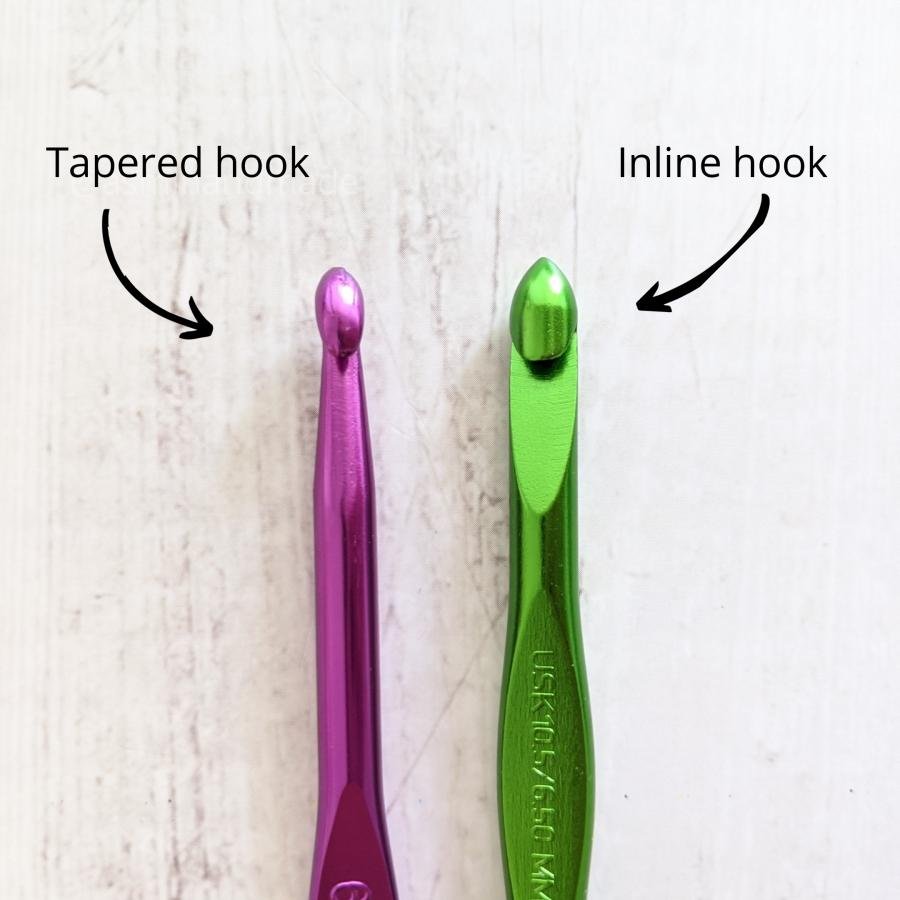
Inline hooks have:
- a straighter shaft,
- sharper edges,
- and a deeper throat.
They create more structured stitches and tighter tension.
Best For
- Amigurumi
- Tight crocheters
- Beginners learning consistency
- Detailed stitch work
Popular Inline Hooks
- Susan Bates crochet hooks
- Some Prym hooks
- Certain Furls styles
Tapered Crochet Hooks
Tapered hooks narrow gradually near the tip.
They usually feel smoother and faster while crocheting.
Best For
- Blankets
- Garments
- Relaxed tension
- Fast stitching
Popular Tapered Hooks
- Clover Amour crochet hooks
- Tulip Etimo hooks
- Boye crochet hooks
Best Crochet Hook Materials
Different crochet hook materials change grip, speed, and comfort more than people expect.
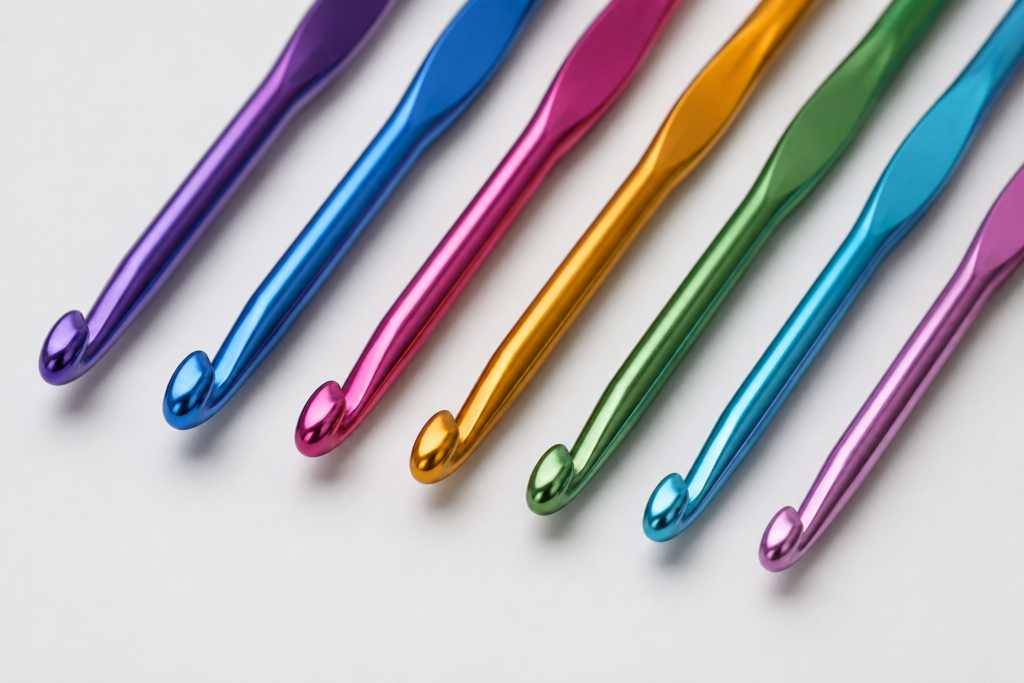
Aluminum Crochet Hooks
Still the most common choice.
Pros
- Smooth
- Lightweight
- Affordable
- Easy to find
Cons
- Can feel slippery
- Less comfortable during long sessions
Best for everyday crochet and beginner projects.
Bamboo Crochet Hooks
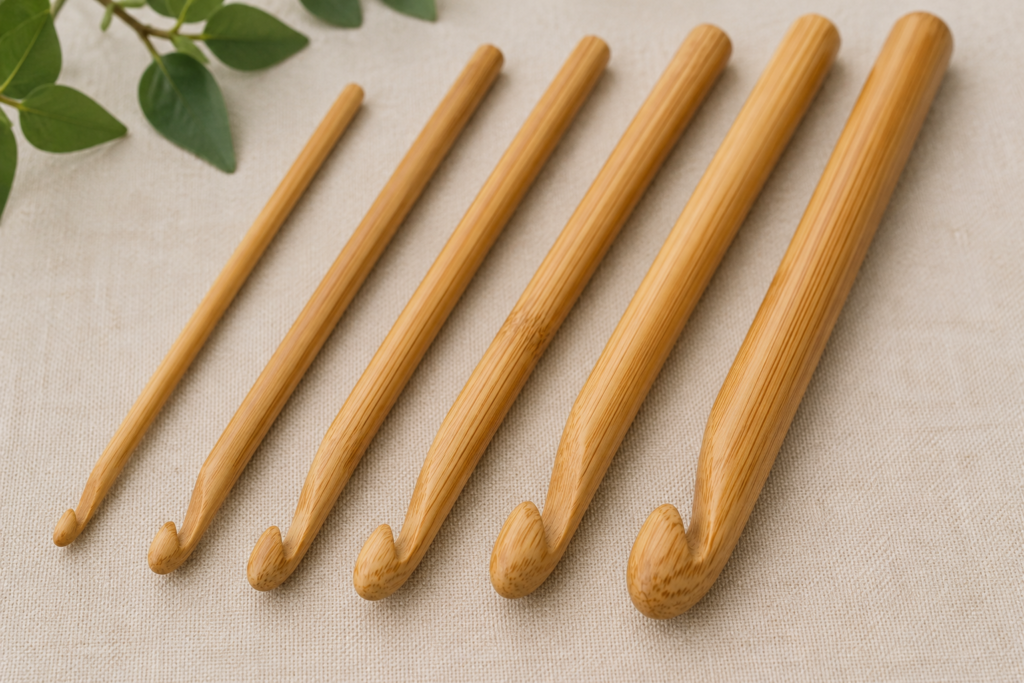
Bamboo adds a little grip, which helps stop yarn from slipping too much.
Pros
- Warm in hand
- Lightweight
- Beginner-friendly
- Good for cotton yarn
Cons
- Not as smooth as metal
- Can wear down over time
Plastic and Acrylic Crochet Hooks
Usually included in cheaper crochet hook sets.
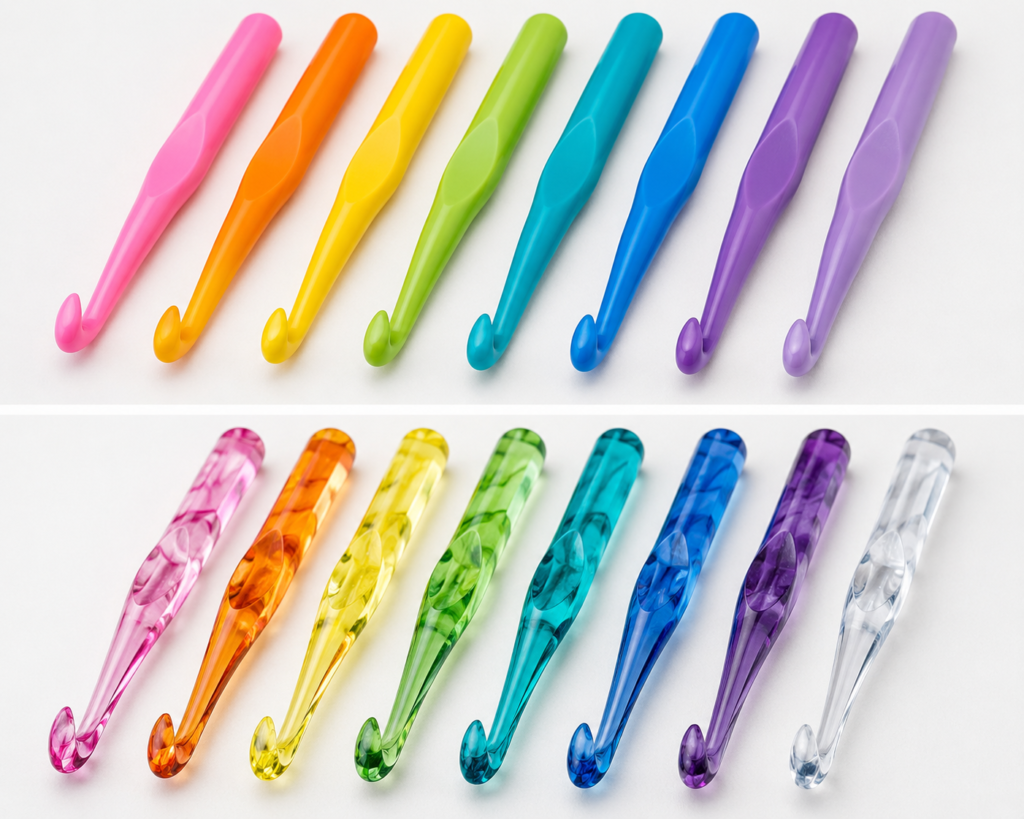
Pros
- Budget-friendly
- Lightweight
- Good for bulky yarn
Cons
- Less durable
- Sometimes squeaky
- Can bend under pressure
Wooden and Resin Crochet Hooks
These are popular with crocheters who want comfort and aesthetics together.
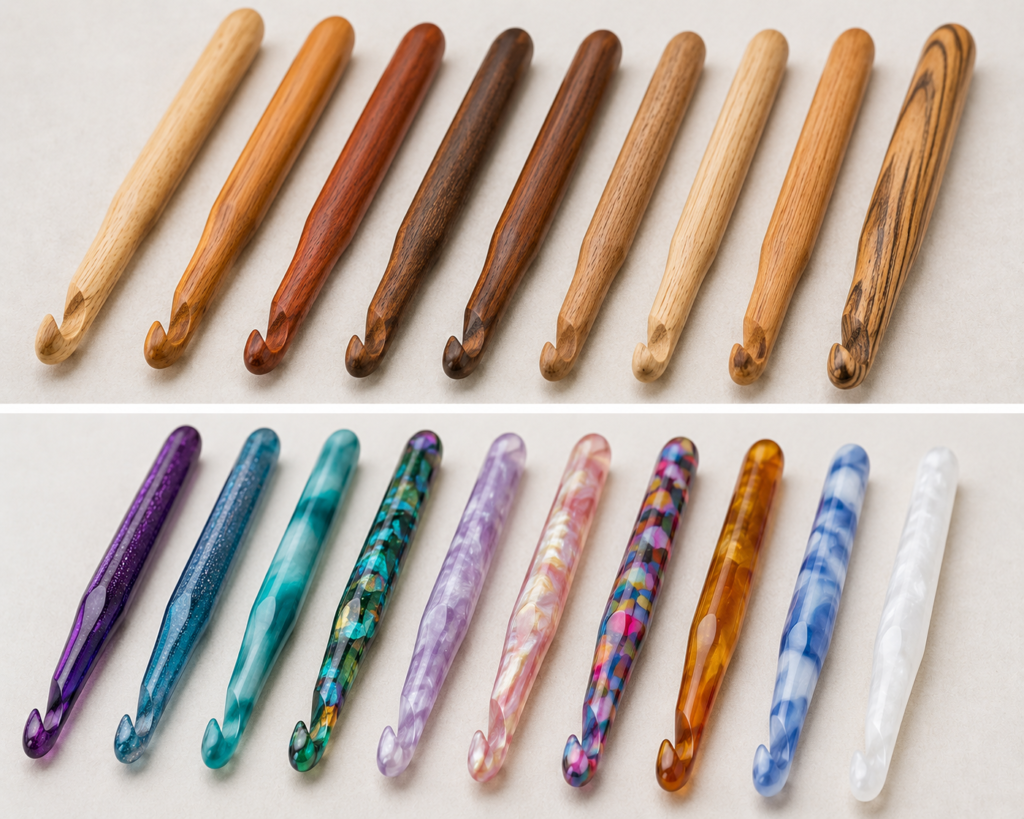
Pros
- Comfortable grip
- Beautiful designs
- Warm feel
Cons
- Expensive
- Sometimes heavier
They also photograph beautifully for Pinterest crochet setups.
Best Crochet Hooks Ranked
After testing different crochet hooks over multiple projects, these stand out most for comfort, smoothness, and stitch quality.
1. Clover Amour Crochet Hooks Best Overall
If I could only keep one crochet hook set, it would probably be Clover Amour.
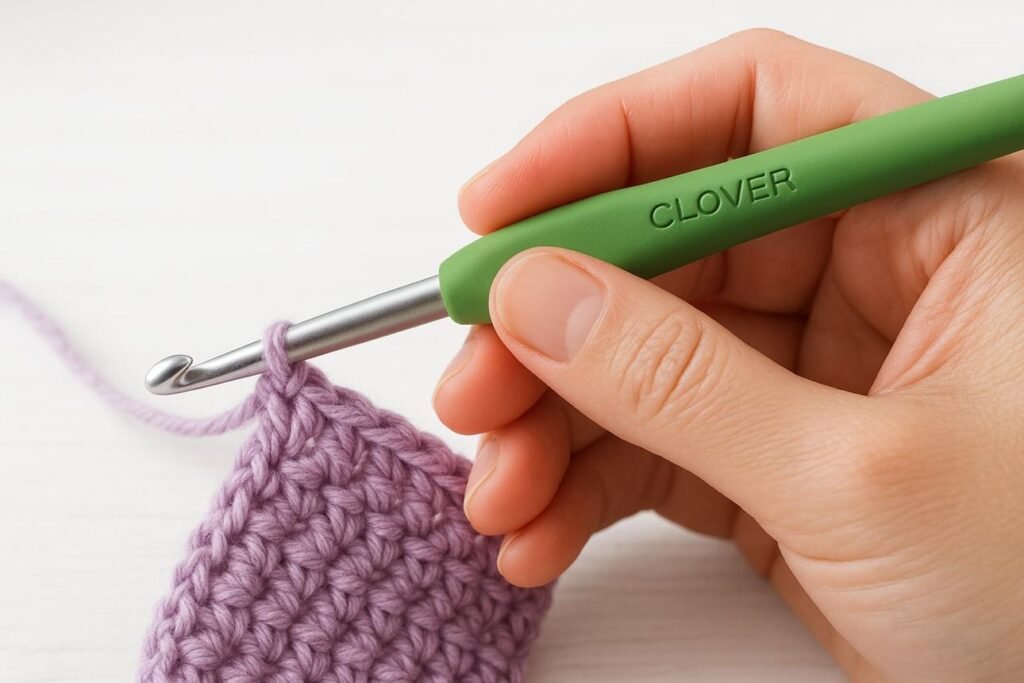
They’re lightweight, smooth, and comfortable enough for long crochet sessions without making your wrist ache halfway through.
I especially like these for the following:
- granny square blankets,
- scarves,
- wearable projects,
- and beginner crochet.
Pros
- Extremely comfortable grip
- Smooth yarn glide
- Lightweight
- Great for beginners
- Reduces hand fatigue
Cons
- More expensive than standard hooks
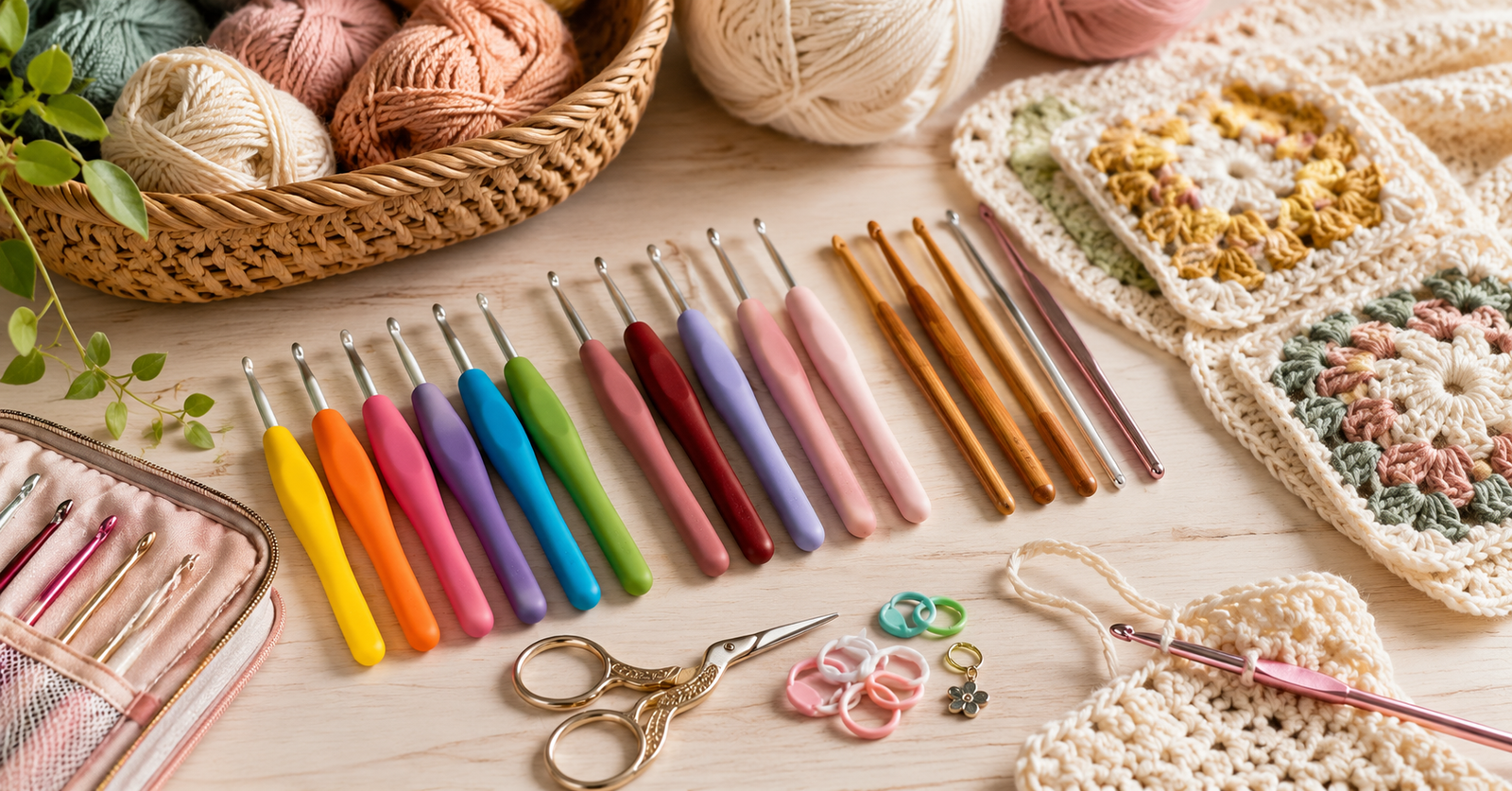
- Bright handles aren’t everyone’s style
Best For
- Everyday crochet
- Beginners
- Long crochet sessions
- Blanket projects
2. Tulip Etimo Crochet Hooks: Smoothest Stitching
Tulip hooks feel polished in a way that’s hard to explain until you try them.
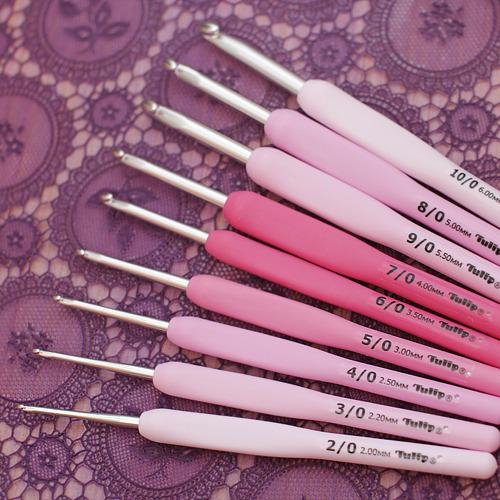
The yarn glide is incredibly smooth, especially with cotton and acrylic yarn.
Pros
- Smooth finish
- Comfortable handle
- Minimal yarn splitting
- Premium feel
Cons
- Expensive
- Grip feels softer than Clover
Best For
- Experienced crocheters
- Fast stitching
- Detailed projects
3. Furls Odyssey Crochet Hooks: Best for Hand Pain
These hooks feel very different from traditional crochet hooks.
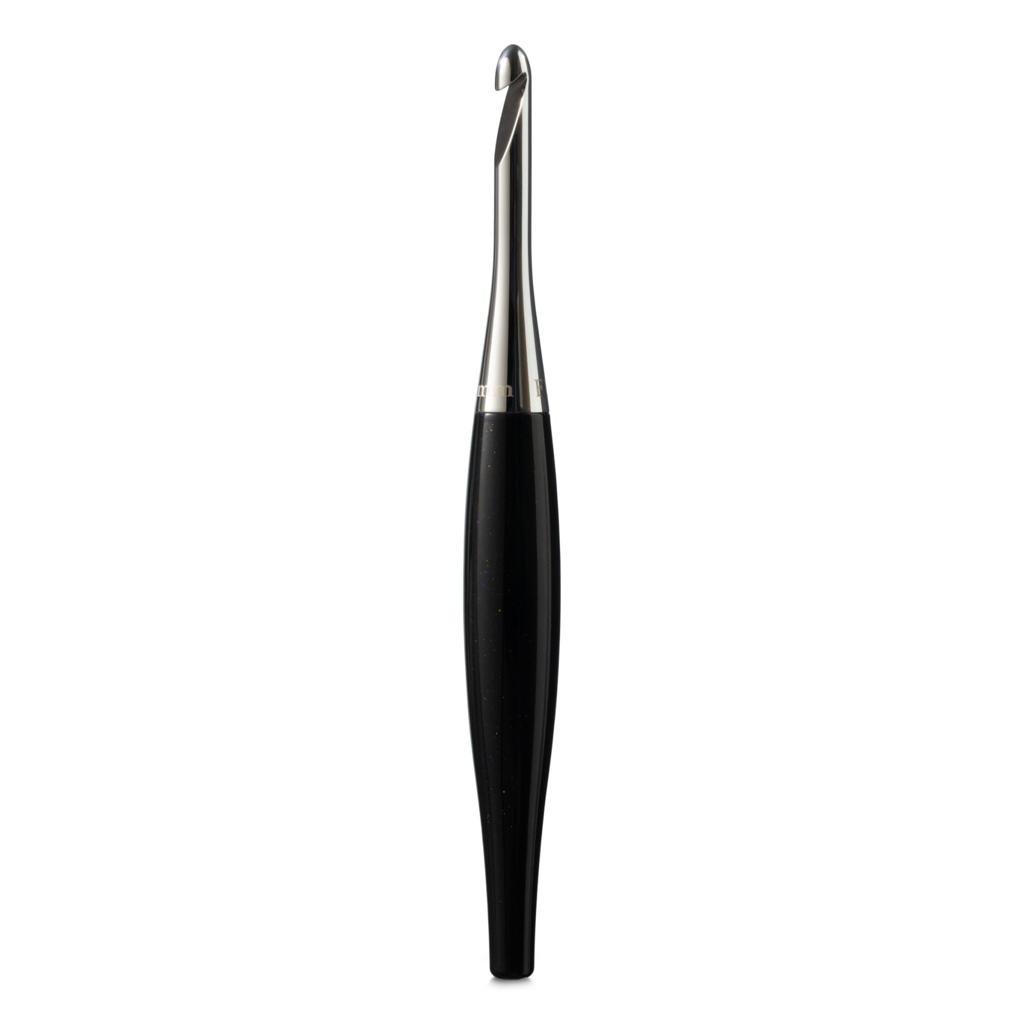
The shape changes your hand position, which can really help during long projects.
Pros
- Comfortable balance
- Helps reduce wrist strain
- Beautiful design
- Feels substantial in hand
Cons
- Heavy compared to aluminum hooks
- Expensive
Best For
- Arthritis
- Long crochet sessions
- Crocheters with wrist pain
4. Susan Bates Crochet Hooks: Best Inline Hooks
Susan Bates hooks create very clean, defined stitches.
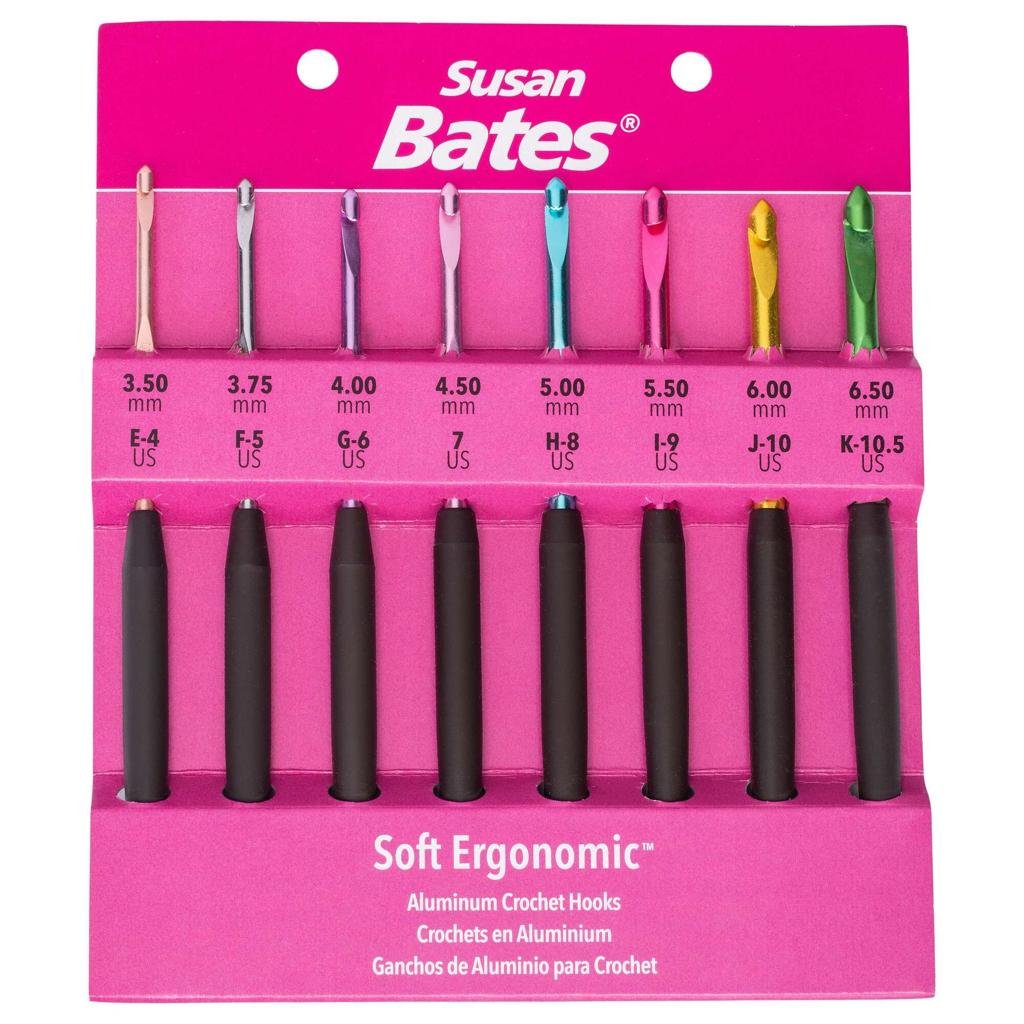
I still reach for them when making tighter amigurumi pieces because the inline shape gives more control.
Pros
- Excellent stitch definition
- Good tension control
- Affordable
- Great for amigurumi
Cons
- Less ergonomic
- Sharper feel than tapered hooks
Best For
- Structured stitches
- Tight tension
- Amigurumi projects
5. Boye Ergonomic Crochet Hooks: Best Budget Option
These are easy to find and beginner-friendly.
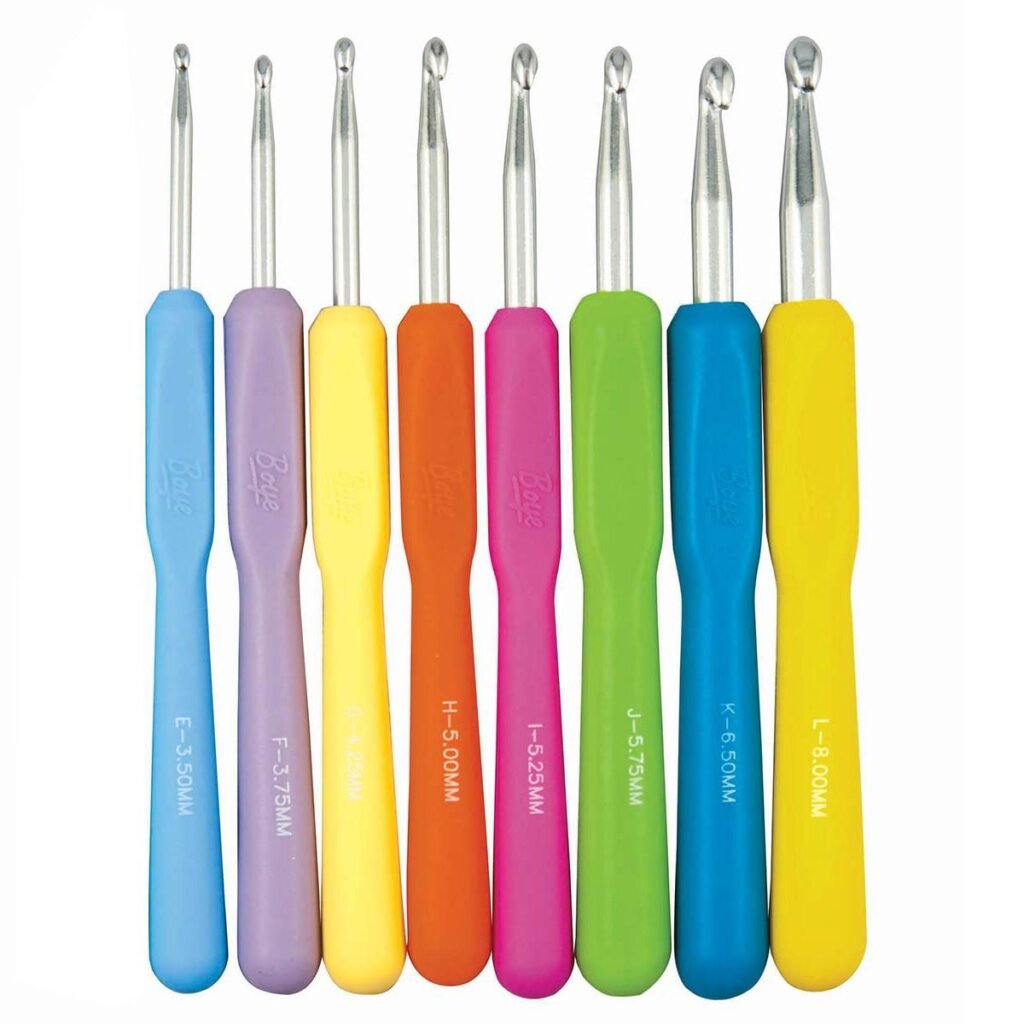
Not the smoothest hooks ever made, but solid for the price.
Pros
- Affordable
- Comfortable grip
- Beginner-friendly
Cons
- Grip durability varies
- Not as polished as premium brands
Best For
- Starter crochet kits
- Casual crocheters
- Beginners
Clover Amour vs Tulip Etimo
This is one of the biggest crochet hook debates online.
Both are excellent ergonomic crochet hooks, but they feel slightly different.
| Feature | Clover Amore | Tulip Etimo |
| Grip firmness | Firmer | Softer |
| Yarn glide | Very smooth | Extremely smooth |
| Beginner-friendly | Excellent | Very good |
| Speed crocheting | Great | Excellent |
| Price | Slightly cheaper | More expensive |
If you want comfort and value, Clover Amour is usually the safer pick.
If you prioritize ultra-smooth stitching, Tulip Etimo is amazing.
Best Crochet Hooks for Beginners
If you’re just starting crochet, don’t overcomplicate it.
A comfortable 5 mm ergonomic crochet hook and medium-weight yarn are enough.
Best Beginner Crochet Hooks
- Clover Amore
- Boye Ergonomic
- Susan Bates inline hooks
What Size Crochet Hook Should Beginners Use?
5 mm (H-8) Crochet Hook
Most beginners learn fastest with a 5 mm crochet hook because the stitches are easy to see and control.
This size works well for:
- scarves,
- granny squares,
- dishcloths,
- blankets,
- beginner practice swatches.
Crochet Hook Size Chart
| US Size | Metric Size |
| B-1 | 2.25 mm |
| C-2 | 2.75 mm |
| D-3 | 3.25 mm |
| E-4 | 3.5 mm |
| F-5 | 3.75 mm |
| G-6 | 4 mm |
| H-8 | 5 mm |
| I-9 | 5.5 mm |
| J-10 | 6 mm |
| K-10.5 | 6.5 mm |
Yarn Weight and Crochet Hook Sizes
| Yarn Weight | Recommended Hook Size |
| Lace | 1.5–2.25 mm |
| Fingering | 2.25–3.5 mm |
| DK | 4–4.5 mm |
| Worsted | 5–6 mm |
| Bulky | 6.5–9 mm |
Always check the yarn label too. Hook recommendations can vary slightly.
Best Ergonomic Crochet Hooks for Arthritis
Hand pain can make crocheting miserable fast.
If your wrist hurts during longer projects, ergonomic crochet hooks are worth trying.
Best Options
- Furl’s Odyssey
- Clover Amore
- Tulip Etimo
These hooks help reduce the following:
- finger strain,
- wrist pressure,
- tight gripping.
A softer grip and balanced weight really do help.
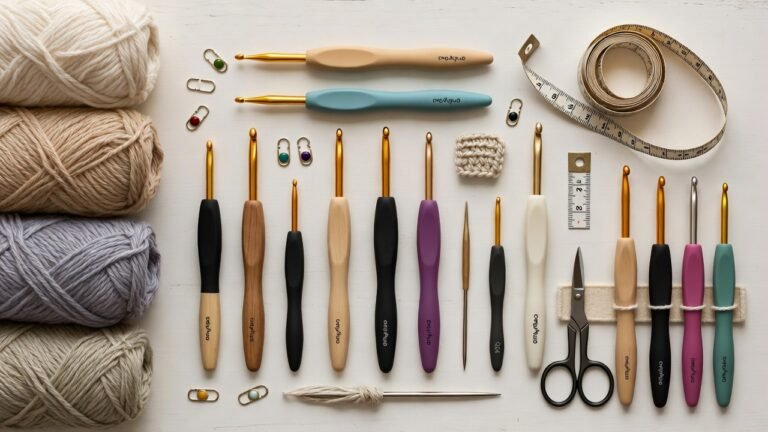
Crochet Hook Accessories Worth Buying
A few accessories honestly make crocheting easier.
Helpful Crochet Accessories
- Crochet hook organizer
- Stitch markers
- Row counters
- Yarn bowls
- Small scissors
- Measuring tape
These also make great gift ideas for crocheters.
Crochet Supplies Checklist for Beginners
Starting crochet doesn’t require much.
Beginner Crochet Essentials
- 5 mm crochet hook
- Medium-weight yarn
- Stitch markers
- Yarn needle
- Small scissors
- Crochet hook case or organizer
That’s enough to start most beginner crochet projects.
Crochet Hook Storage Ideas
Once your hook collection grows, storage matters.
Popular crochet hook organizer ideas:
- zippered crochet hook cases,
- roll-up organizers,
- mason jars,
- pencil pouches,
- hanging storage.
Colorful crochet hooks and organized crochet spaces also perform really well on Pinterest.
Common Crochet Hook Mistakes
Using the Wrong Hook Size
This changes:
- tension,
- project size,
- fabric texture.
Always check the pattern gauge.
Gripping the Hook Too Tightly
A tight grip causes hand fatigue quickly.
Ergonomic crochet hooks help a lot here.
Buying Huge Cheap Hook Sets
Most oversized crochet hook sets include low-quality hooks you’ll barely use.
A few good hooks usually work better than dozens of cheap ones.
5 Signs You Need a Better Crochet Hook
- Your hand hurts after crocheting
- Yarn constantly splits
- Your stitches look uneven
- Crocheting feels awkward or slow
- Your tension changes throughout projects
Are Expensive Crochet Hooks Worth It?
If you crochet often, usually yes.
Higher-quality crochet hooks tend to:
- glide smoother,
- reduce fatigue,
- improve consistency,
- and feel better during long sessions.
You definitely don’t need luxury hooks to crochet well.
But better tools can make crochet a lot more enjoyable.
FAQ About Crochet Hooks
What is the best crochet hook for beginners?
A 5 mm ergonomic crochet hook is usually best for beginners because it’s comfortable and easy to control.
Are ergonomic crochet hooks worth it?
Yes. Ergonomic crochet hooks reduce hand strain and feel more comfortable during long crochet sessions.
What crochet hook size should I start with?
Most beginners should start with a 5 mm (H-8) crochet hook and medium-weight yarn.
What’s the difference between inline and tapered crochet hooks?
Inline hooks create tighter, more defined stitches. Tapered hooks usually feel smoother and faster while crocheting.
Can the wrong crochet hook affect tension?
Yes. Hook shape, material, and grip style can all affect stitch tension and consistency.
How do I store crochet hooks?
A crochet hook case or organizer helps keep hooks sorted and easy to find.
What crochet hook is best for granny squares?
Clover Amour and Tulip Etimo hooks both work especially well for granny square projects.
Can you take crochet hooks on airplanes?
Usually, yes, although airport security rules can vary depending on location.
Final Thoughts
The best crochet hook depends on your hands, your tension, and the kinds of projects you crochet most. For many crocheters, Clover Amour hooks hit the sweet spot between comfort, smooth stitching, and durability. Still, it’s worth trying different styles. Sometimes switching crochet hooks completely changes how crochet feels.